

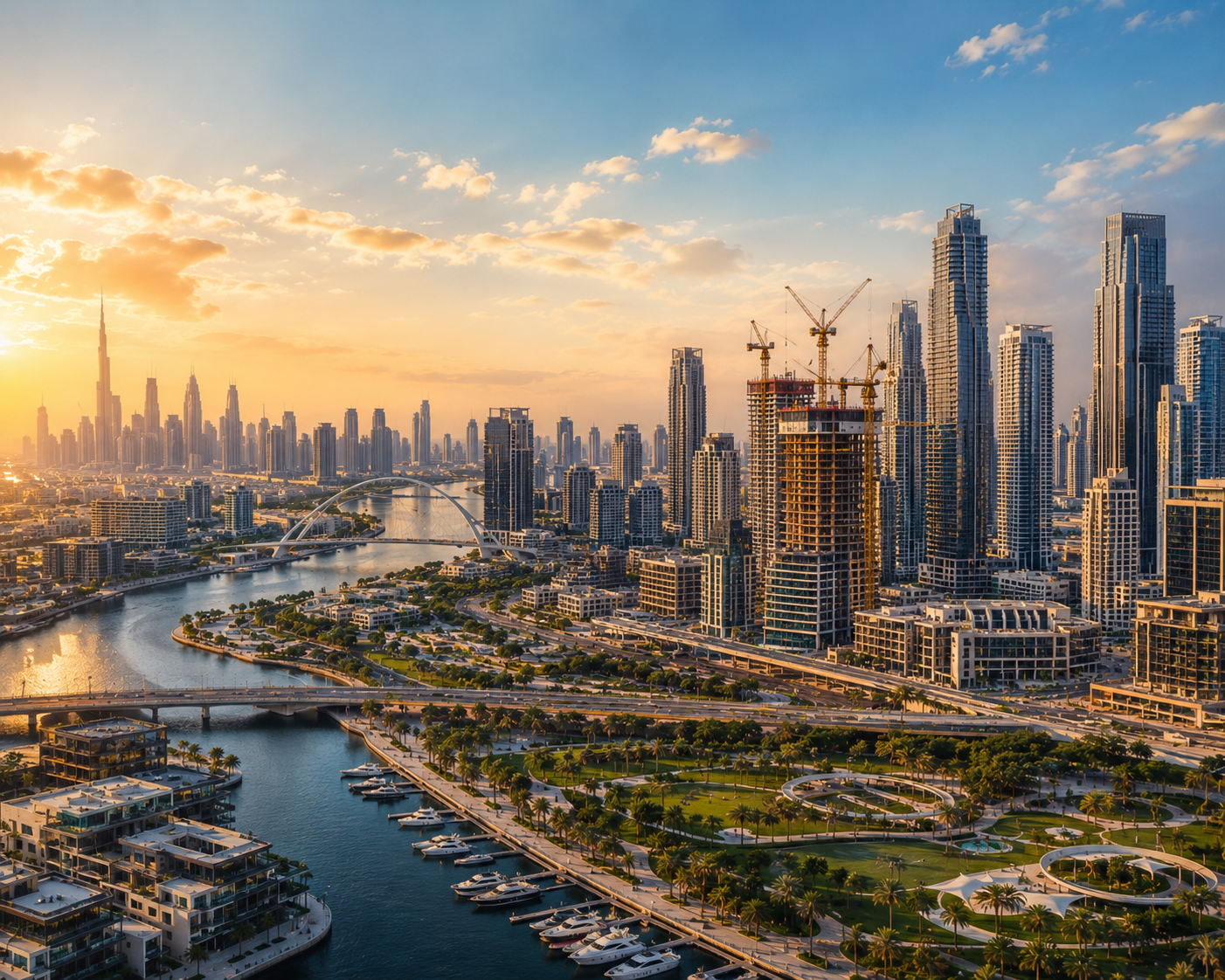
Dubai has become one of the world’s most attractive destinations for real estate investment. While high rental yields, tax advantages, and strong capital appreciation continue to attract international buyers, a much bigger story is unfolding behind the scenes.
According to JLL’s Navigating Tomorrow: Critical Insights for the UAE’s Evolving Real Estate Landscape (2026), the United Arab Emirates is entering one of the largest investment cycles in its modern history.
Between 2026 and 2030, the country is expected to deliver approximately USD 795 billion in projects across multiple sectors. Of that total, nearly USD 470 billion has been committed specifically to real estate development.
These figures are significant because they demonstrate that the continued growth of Dubai’s property market is being supported by long-term investment strategies rather than short-term market conditions.
A Historic Investment Pipeline
The UAE’s projected USD 795 billion development pipeline includes infrastructure, transportation, tourism, industrial projects, utilities, and real estate developments.
Within that broader investment program, USD 470 billion is allocated to the real estate sector alone.
This distinction is important.
The overall investment pipeline reflects the country’s long-term economic vision, while the real estate allocation highlights the government’s continued commitment to expanding residential communities, commercial districts, mixed-use developments, hospitality projects, and lifestyle destinations.
Rather than slowing construction, the UAE is actively investing in the next generation of cities and communities.
Why This Matters for Dubai Real Estate
Large-scale investment creates much more than new buildings.
It generates employment, attracts businesses, expands infrastructure, increases population growth, and improves overall quality of life.
Historically, these factors have contributed to sustained demand for residential and commercial properties throughout Dubai.
JLL also notes several indicators that continue to support the market:
- Record residential transaction activity during 2025.
- Double-digit rental growth within the industrial and logistics sector.
- Extremely limited availability of Grade A office space.
- Continued demand for premium residential communities.
Taken together, these indicators suggest that demand continues to outpace supply in several high-quality segments of the market.
Dubai's Leading Developers Continue to Shape the City's Future
One of the strongest indicators of confidence in Dubai’s real estate market is the continued expansion of the city’s leading developers.
Companies such as Emaar Properties, Sobha Realty, DAMAC Properties, Nakheel, Meraas, Binghatti, Azizi Developments, Danube Properties, Ellington Properties, Omniyat, MAG Group, Select Group, and Aldar continue to launch new residential communities, waterfront developments, luxury apartments, branded residences, and master-planned neighborhoods across Dubai.
Each developer contributes to different market segments.
Emaar continues to expand iconic communities while developing destinations that combine residential, retail, hospitality, and entertainment.
Sobha Realty has built a strong reputation for premium construction quality and integrated communities.
DAMAC remains one of Dubai’s largest luxury developers with projects throughout the city.
Nakheel continues expanding landmark waterfront developments including Palm Jebel Ali.
Meraas focuses on lifestyle destinations that blend residential living with retail, leisure, and tourism.
Meanwhile, developers such as Binghatti, Danube Properties, Azizi Developments, Ellington Properties, Select Group, MAG Group, and Omniyat continue introducing projects that appeal to investors seeking a wide range of budgets, payment plans, and investment strategies.
The continued activity of these developers reflects confidence in Dubai’s long-term growth rather than short-term market cycles.
Infrastructure Investment Supports Property Values
Real estate does not grow in isolation.
One of the biggest advantages of investing in Dubai is that property development is supported by continuous investment in infrastructure.
Major projects currently shaping the country’s future include:
- Dubai Metro Blue Line
- Expansion of Al Maktoum International Airport
- New road networks
- Smart city initiatives
- Logistics infrastructure
- Tourism developments
- New residential communities
These investments improve connectivity, reduce travel times, create new business districts, and increase the attractiveness of emerging locations.
Historically, infrastructure expansion has played a major role in supporting long-term property values across Dubai.
Why International Investors Continue Choosing Dubai
Global investors are not attracted to Dubai because of a single project.
They are attracted by a combination of economic fundamentals.
Some of the key reasons include:
- No annual property tax.
- No capital gains tax for individuals.
- Strong rental demand.
- A diversified economy.
- Political stability.
- World-class infrastructure.
- Strategic geographic location connecting Europe, Asia, and Africa.
- Investor-friendly regulations.
- Residency options through qualifying property investment.
These advantages continue to position Dubai among the world’s most competitive real estate markets.
What This Means for Property Buyers
Every investment decision should be based on careful analysis rather than market hype.
However, one principle remains consistent across global real estate markets:
Long-term value is often supported by long-term investment.
The UAE’s commitment to hundreds of billions of dollars in infrastructure and real estate development demonstrates confidence in the country’s future growth.
For investors, this creates opportunities across multiple segments, including:
- Off-plan properties
- Ready properties
- Luxury residences
- Waterfront developments
- Family communities
- Rental investment
- Holiday homes
- Commercial real estate
Whether the objective is capital appreciation, rental income, portfolio diversification, or relocating to Dubai, understanding these long-term market fundamentals can help investors make more informed decisions.
Final Thoughts
Dubai’s real estate market continues to evolve.
The combination of government investment, expanding infrastructure, population growth, and the continued launch of projects by leading developers creates a strong foundation for future growth.
While no market is without risk, the long-term fundamentals supporting Dubai remain among the strongest globally.
As the UAE moves toward 2030 with approximately USD 795 billion in planned projects—of which USD 470 billion is dedicated to real estate—the country’s commitment to sustainable urban development is becoming increasingly evident.
For investors looking beyond short-term market fluctuations, Dubai continues to present compelling opportunities backed by long-term vision, infrastructure, and economic diversification.
Source
JLL. Navigating Tomorrow: Critical Insights for the UAE’s Evolving Real Estate Landscape (2026).